Why Playing Against Real People Unlocks a Version of You That Solo Mode Never Could
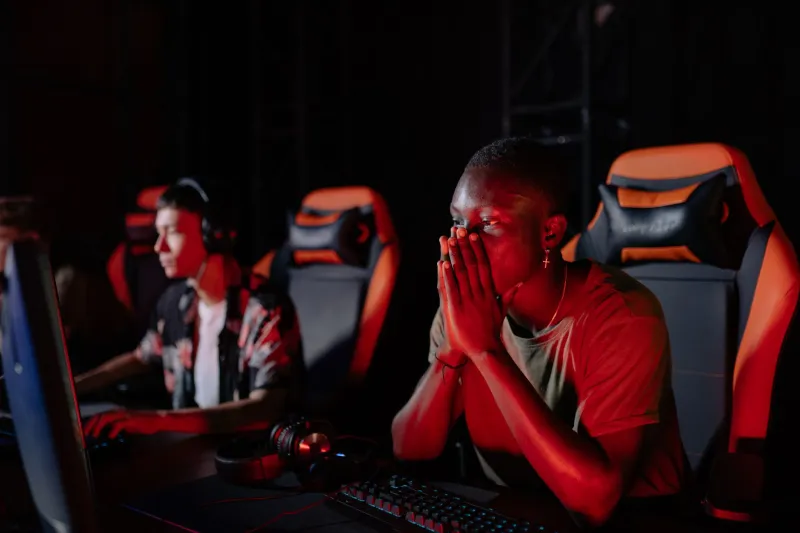
Anyone who's spent serious time grinding ranked queues or stepping into an online tournament bracket knows the feeling. The lobby fills up, real usernames appear, and something shifts. Your posture straightens. Your focus narrows. Suddenly, you're not the same player who was casually farming bots twenty minutes ago.
This isn't just a vibe. There's actual science behind it — and understanding it could be the single biggest unlock for your competitive game.
The Brain on Competition: More Than Just Adrenaline
When you queue up against a real opponent, your nervous system reads the situation differently than it does during a solo session. Dr. Leah Torres, a sports and performance psychologist who has worked with esports organizations across the US, describes it as a shift in what she calls "motivational salience."
"The brain assigns more importance to outcomes when there's genuine social consequence," she explains. "Losing to an AI carries almost no emotional weight. Losing to another human — especially someone at your skill level — activates the same threat-and-reward circuitry that's been wired into us for thousands of years."
That circuitry releases a cocktail of neurochemicals. Norepinephrine sharpens attention. Dopamine primes the reward system for the win. Cortisol, in controlled amounts, actually improves short-term memory and reaction processing. In the right dose, these aren't performance killers — they're performance fuel.
The key phrase there is right dose. Too much, and you spiral into what competitive coaches call "red zone" thinking — reactive, tunnel-visioned, and sloppy. But when the pressure is calibrated to your skill level, the result is something closer to flow state.
The Rivalry Ladder: Why Specific Opponents Matter Most
Not all competition triggers this effect equally. Research in competitive psychology consistently shows that players perform at their highest levels against opponents they perceive as slightly better than themselves — not far better, not far worse, but right at the edge of their current ceiling.
Jordan "Kestrel" Vance, a competitive gaming coach based out of Atlanta who has trained players across multiple titles including fighting games and tactical shooters, calls this the "rivalry ladder."
"I tell my players to identify two or three names — people they've lost to before, people they respect, people they know they can beat if they play clean," Vance says. "When one of those names shows up in bracket, I watch my players transform. Their decision-making gets faster. They stop second-guessing. The rivalry does coaching work I couldn't do in a month of sessions."
This tracks with the broader concept of social comparison theory, which suggests humans constantly benchmark themselves against others in their reference group. When your benchmark is a faceless AI or a generic ranked opponent, the stakes feel abstract. When it's someone you know — or someone who beat you last week — the stakes feel personal. And personal stakes sharpen focus in ways that abstract ones simply don't.
Tournament Pressure as a Practice Tool
Here's where it gets practically useful for anyone playing on a platform like Pung777 Plus: tournaments aren't just for winning. They're for triggering the neurological state that makes you better.
Many casual players avoid tournament formats because they assume they're not ready. But coaches and psychologists alike argue that's exactly backward. You don't get ready for competition by waiting until you feel ready. You get ready by putting yourself in competitive situations repeatedly until your nervous system stops treating them as threats and starts treating them as home turf.
"Think of it like cold exposure," says Torres. "The first time you jump in cold water, your body panics. After twenty times, your body adapts and you can actually think clearly in the cold. Tournament nerves work the same way. The adaptation is neurological, and it only comes from repetition under real conditions."
That means entering brackets even when you're not confident. It means playing ranked instead of unranked when you're tired. It means choosing live opponents over bot lobbies whenever possible — because every real match is a rep that builds the mental muscle you'll need when the prize pool actually matters.
Channeling Rivalry Without Letting It Burn You
Of course, rivalry has a dark side. The same competitive fire that sharpens your reads can curdle into fixation, trash talk spirals, or the kind of ego-driven play that gets you eliminated in round two. The difference between players who harness rivalry and players who get consumed by it usually comes down to one thing: intentionality.
Vance coaches his players to use a simple pre-match ritual he calls "reset and redirect." Before a match against a known rival or high-stakes opponent, players spend sixty seconds doing three things: acknowledging the emotional stakes out loud (internally), deliberately slowing their breathing, and setting a single process goal for the match — not a result goal.
"'I want to win' is a result goal," Vance explains. "'I'm going to call out every piece of information I see in the first two minutes' is a process goal. Process goals keep you present. Result goals keep you anxious."
The distinction sounds small. In practice, it's the difference between playing your game and playing the scoreboard.
The Takeaway for Everyday Competitors
You don't need to be a pro to benefit from understanding the rivalry effect. Whether you're grinding casual tournaments on Pung777 Plus or just trying to climb your ranked ladder, the principle is the same: real opponents unlock real performance, and that performance edge is something you can train into a reliable tool.
Stop avoiding the players who make you nervous. Stop skipping tournaments because you're "not ready." The version of you that performs under pressure already exists — it just needs the right opponent to show up.